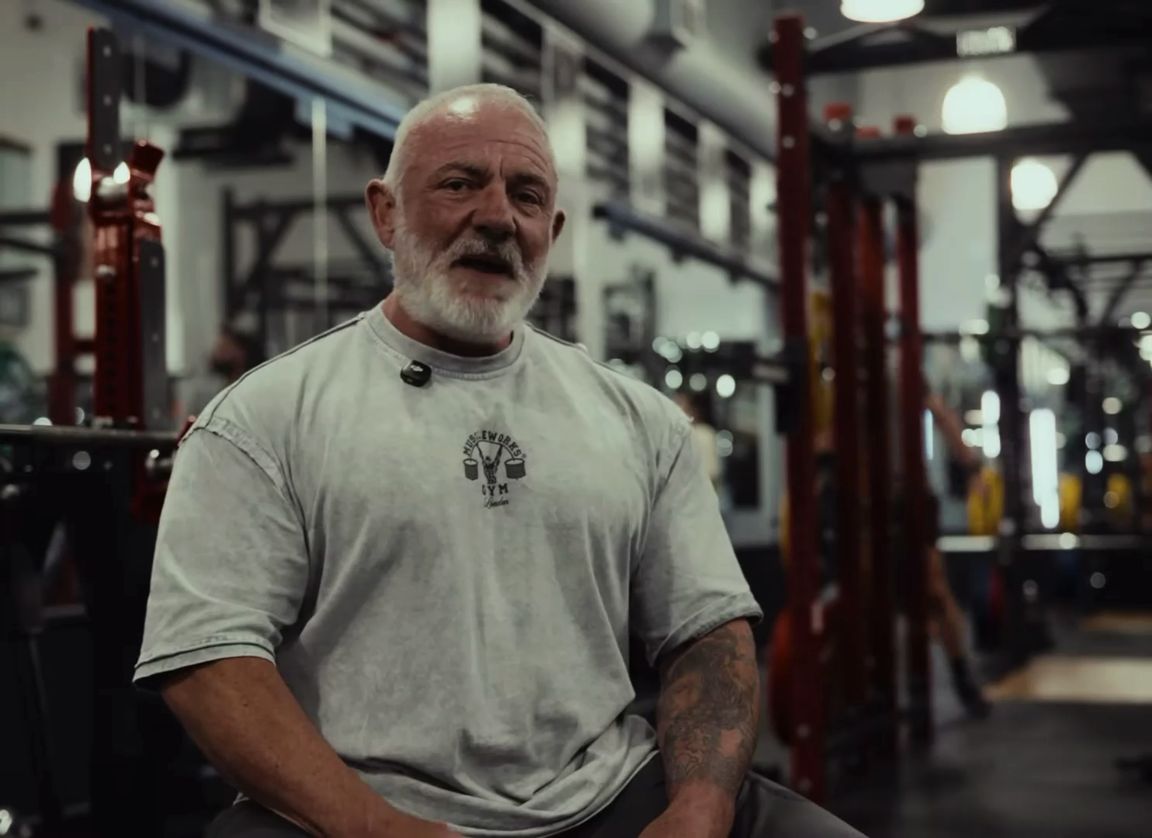
London has more personal trainers per square mile than almost anywhere in Europe, and almost no straight information about how to choose one. Most websites make the same three claims: elite team, bespoke programmes, amazing results. Very few publish a price. Fewer still name a qualification.
This guide fixes that. I have spent over thirty years in this industry, as a competitor, a coach and, for three of those years, a patient rebuilding from cancer treatment. I have seen what good coaching does for a man in his forties and I have seen what bad coaching costs him. So here is the honest version, including the parts that do not flatter my own trade.
What personal training costs in London
Start with the number nobody puts on their homepage. Across London, most trainers charge between £50 and £150 per session, and that range splits into three fairly predictable tiers.
Rates in central and west London consistently run above the outer boroughs. In-home training costs more per session because you are also buying travel time. Online coaching sits lowest per session, though it asks more of you in return.
Compare what surrounds the session, not the session
Price per hour is the wrong unit. Compare these instead:
- A written programme you can follow on the days you train alone
- Nutrition guidance that survives client dinners and travel weeks
- Regular reassessment, rather than the same circuit every week
- Direct contact between sessions when something goes wrong
- Cancellation and rescheduling terms, in writing, before you pay
A £60 session with all five beats a £120 session with none of them. Ask what happens on the other six days before you compare headline rates.
Tony's take
I get asked for a flat hourly rate most weeks, and I will not give one before we have spoken. Not because I am hiding anything, but because I do not know yet whether you need me twice a week or once a fortnight. Quoting a number before an assessment is guessing with your money.
What I will tell you on that first call is whether I am the right coach for you at all. Sometimes I am not, and you will hear that from me rather than from your bank statement six months later.
Tony Barnbrook, IFBB Pro
How to check a trainer is actually qualified
Anyone in the UK can legally call themselves a personal trainer. Nothing stops them. The burden of checking therefore falls on you, and it takes about five minutes.
The baseline qualification
The accepted industry minimum is a Level 3 Diploma in Personal Training, awarded through an Ofqual-regulated organisation. Level 2 qualifies someone as a gym instructor, not a personal trainer. If a coach cannot name their level and awarding body without hesitating, you have your answer.
The register you can check
The Chartered Institute for the Management of Sport and Physical Activity (CIMSPA) is the professional body for the UK sport and physical activity sector, holding a royal charter sealed in 2011. It absorbed the former Register of Exercise Professionals into a single national directory. Membership is not legally compulsory, so absence does not prove incompetence. Presence, however, is quick independent confirmation that someone is who they say they are.
Insurance, and the question most people forget
Ask it plainly: can you email me your current public liability and professional indemnity certificate? A professional sends it the same day without a flicker. Hesitation here tells you how the rest of the relationship will run.
One more. If a coach offers nutrition guidance, establish what they are qualified to give. Dietitian is a legally protected title in the UK, restricted to HCPC-registered practitioners. A Level 3 or Level 4 nutrition qualification allows general healthy-eating advice, not clinical dietary treatment. Any website claiming an in-house dietitian should be able to name that person and their registration.
Tony's take
Certificates get you through the door. They do not make you a coach. I have met Level 3s who could not spot a compensating hip in a squat, and I have met coaches with a wall of qualifications who had never trained a man in his fifties in their lives.
So check the paperwork, then ask the harder question: who have you actually coached, and were they anything like me?
Tony Barnbrook, IFBB Pro
Why your decade matters more than your goal
Most London gyms sell outcomes: fat loss, muscle gain, transformation. Far fewer account for the body those outcomes have to happen in, which is the single biggest predictor of whether a programme works or injures you.
What changes after 40
Age-related muscle loss starts earlier than most men assume. You begin losing muscle mass and strength in your thirties or forties, and can lose as much as eight per cent of your muscle mass each decade without intervention, according to the Cleveland Clinic. Resistance training is the primary countermeasure, alongside adequate protein.
That reframes the brief entirely. For a 25-year-old, training is optimisation. For a 48-year-old managing a career, broken sleep and a decade of desk posture, training is maintenance of function first and aesthetics second. Those need different programming, different recovery allowances and different rates of progression.
The floor everyone should clear
For context, the UK Chief Medical Officers recommend adults accumulate at least 150 minutes of moderate intensity activity or 75 minutes of vigorous activity each week, plus muscle-strengthening activity on at least two days a week. A competent programme should clear that floor comfortably while fitting the life you actually lead.
Tony's take
I was diagnosed with cancer in 2020. I spent three years training around treatment instead of through it, and every principle I coach now was stress-tested on the hardest client I have ever had, which was me at 52.
I earned my IFBB Pro card at 55. I am not telling you that to impress you. I am telling you because it is the only honest answer to the question every man over forty asks me first, which is whether it is too late. It is not.
Tony Barnbrook, IFBB Pro · Read the full story
Hybrid arrangements increasingly dominate London, because they match how people actually live: in person when the diary allows, online programming to cover the weeks it does not. If you travel heavily, read how online coaching is structured before you rule out working with a coach at all.